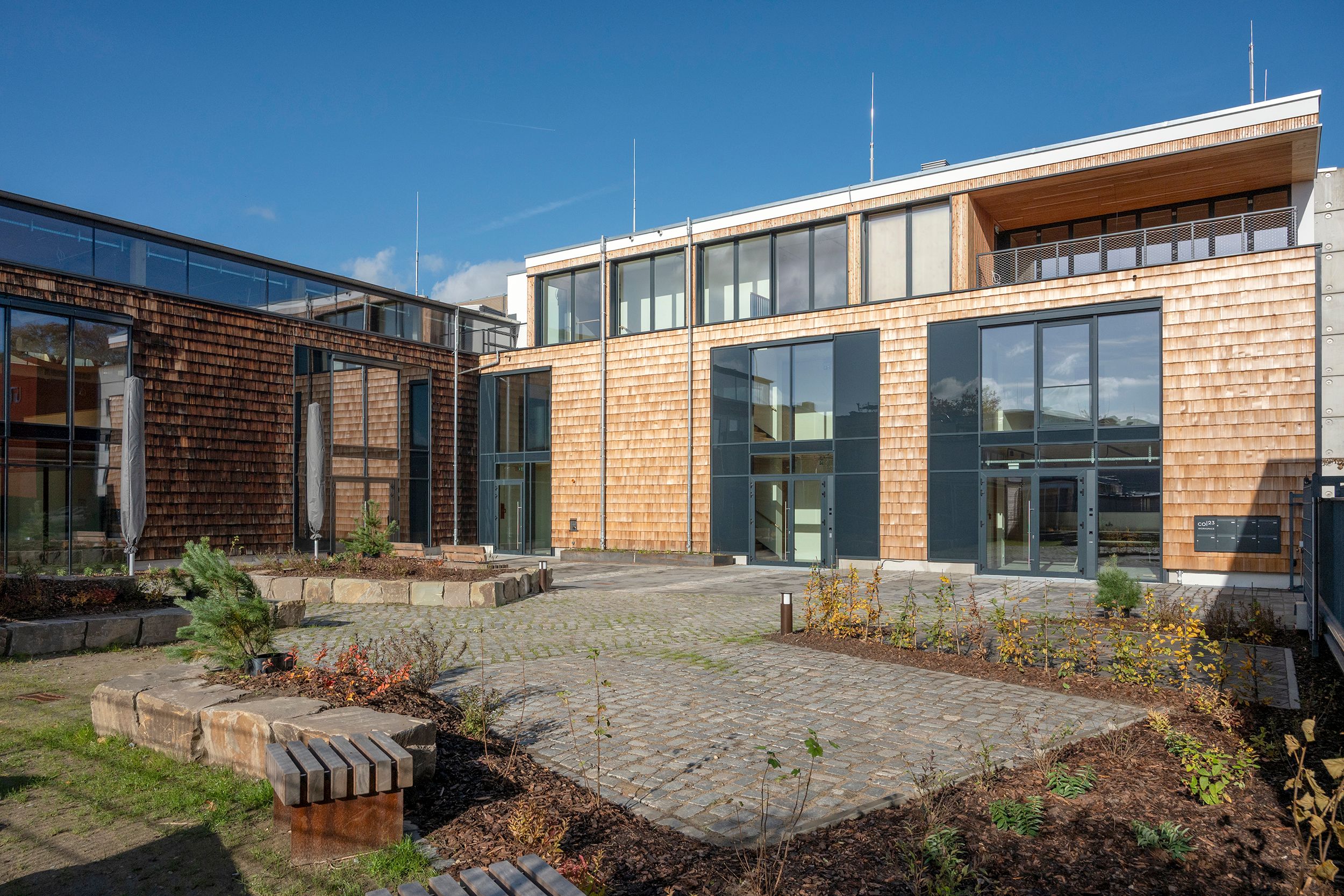
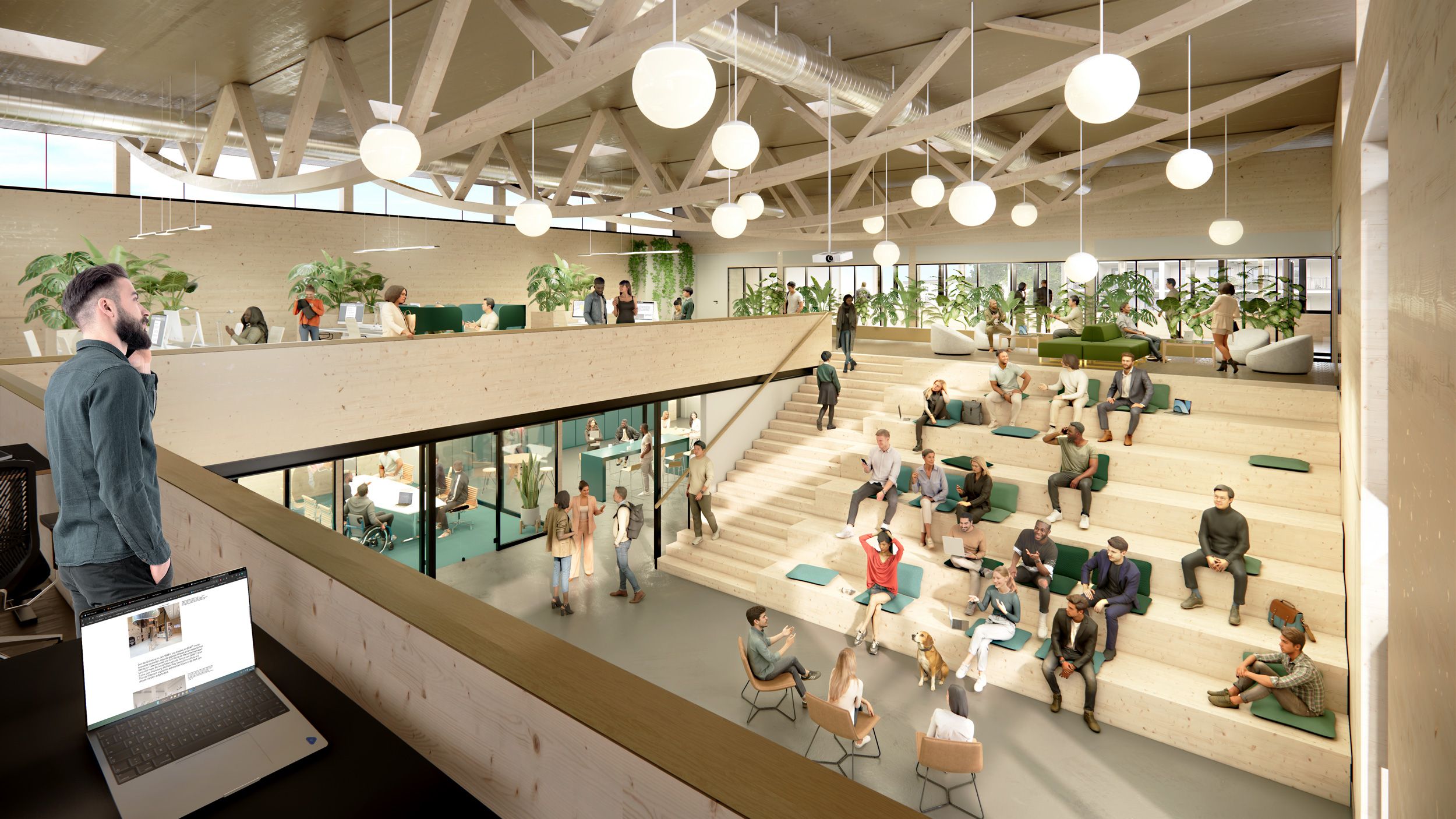
At Columbiadamm 23 in Berlin, an impressive factory building with an adjoining office wing was expanded and converted into a contemporary workspace by GRAFT in 2025.
The building, located directly opposite the former Berlin-Tempelhof Airport, was originally constructed in 2012 by the architectural firm ZRS as a low-energy timber engineering structure and has already received the BDA Award for its ecological design.
For the conversion, GRAFT further developed the existing qualities of the building and optimized it for its future use as a modern coworking space, combining architectural innovation with the requirements of a future-oriented workplace.
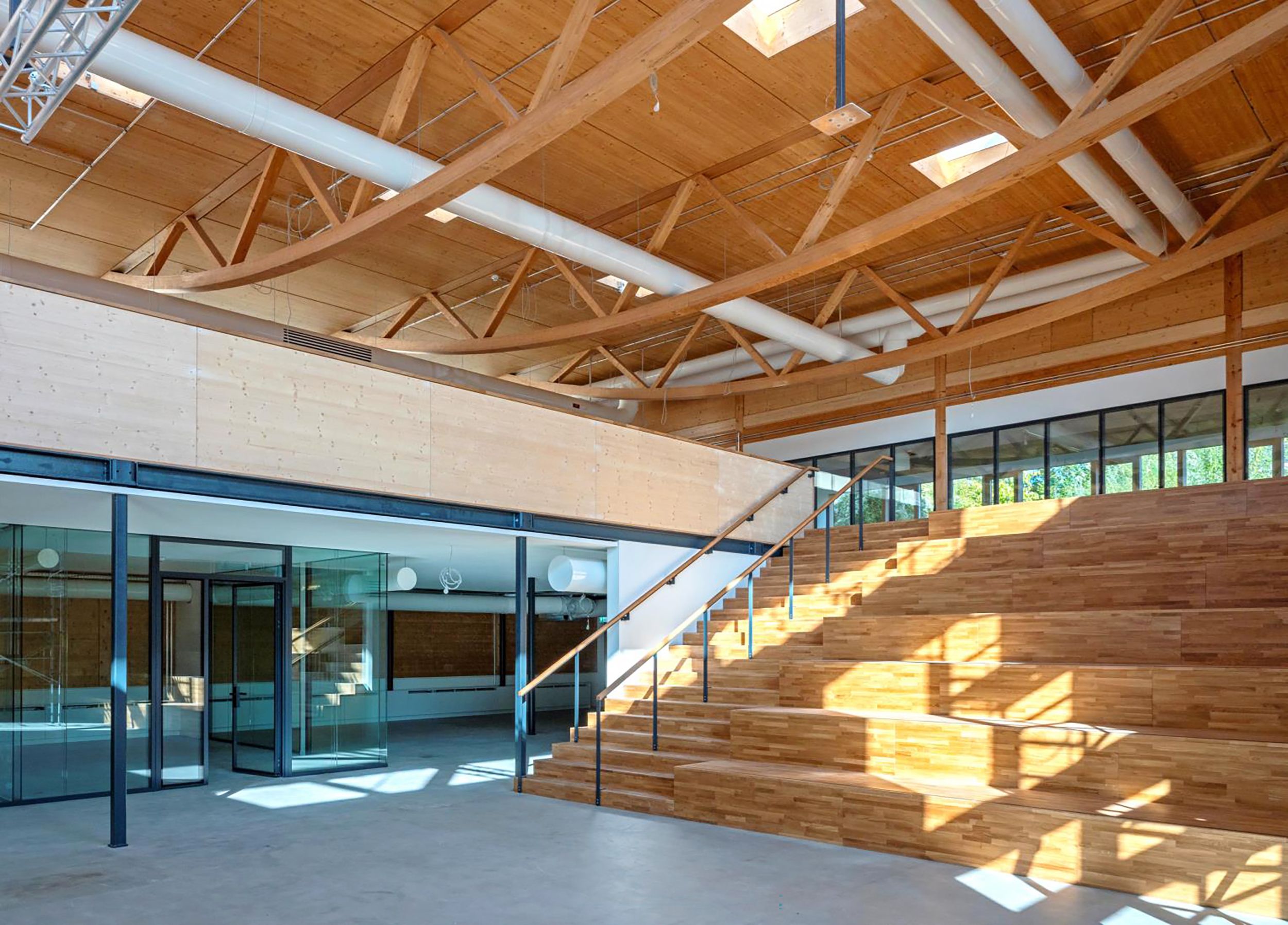
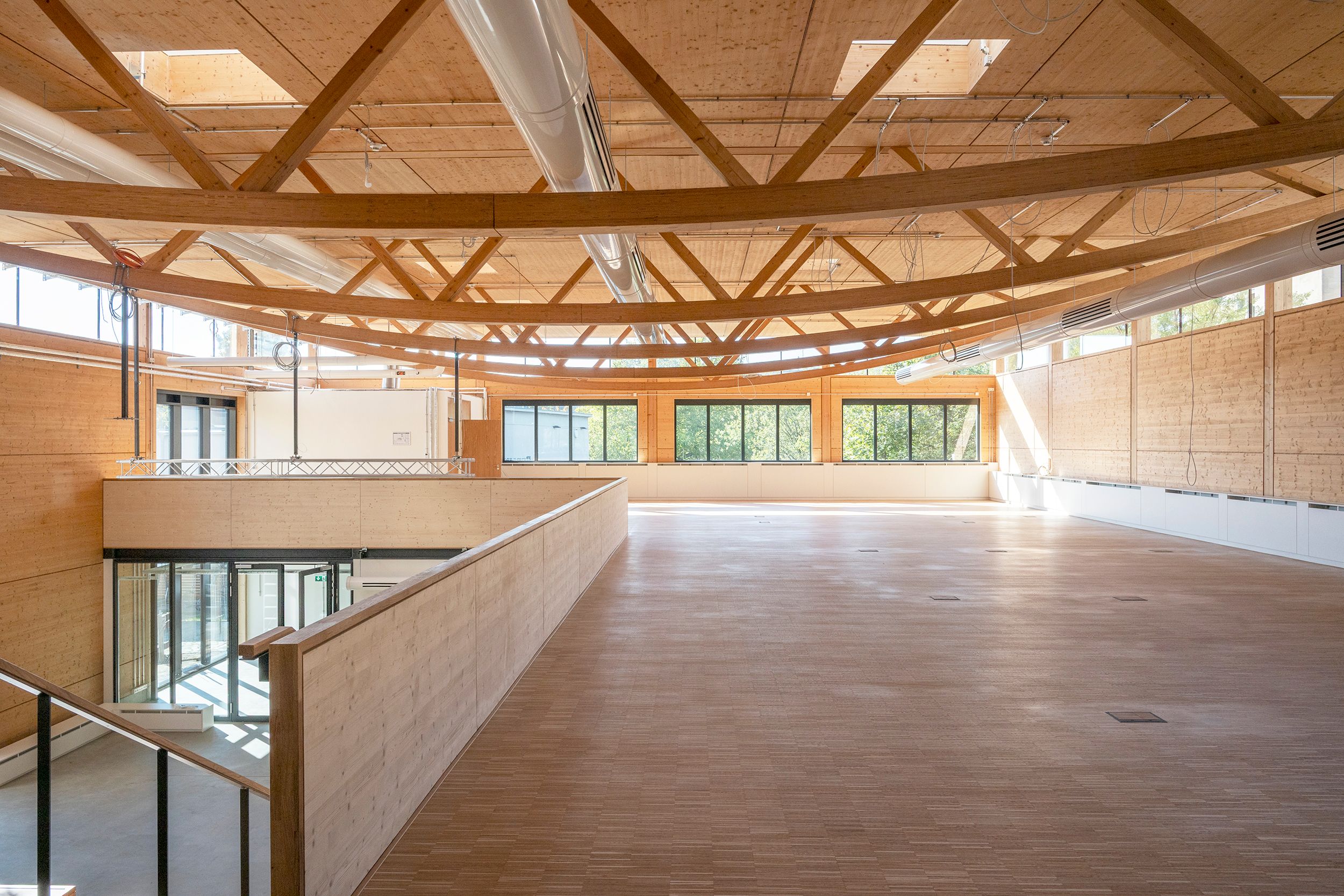
The building's original timber construction was further developed and enhanced to promote high flexibility and agility for its new use. The addition of a gallery level with a spacious open staircase in the former factory hall created a newly designed space for communication and collaboration. The adjacent, previously two-story office wing was extended by one floor.
The previously closed facade of the factory hall now features large openings to generate more natural light for the newly created workspaces. The exposed hall structure, consisting of fishbelly trusses, is preserved.
The resulting coworking space sets new standards for modern work in a sustainable and inspiring environment.
The entire redesign is based on the existing structure and the principles of sustainability: wood, as the primary, resource-conserving, and CO2-neutral material, and energy-efficient solutions, such as retaining the existing wood pellet heating system, contribute to minimizing the project's ecological footprint.