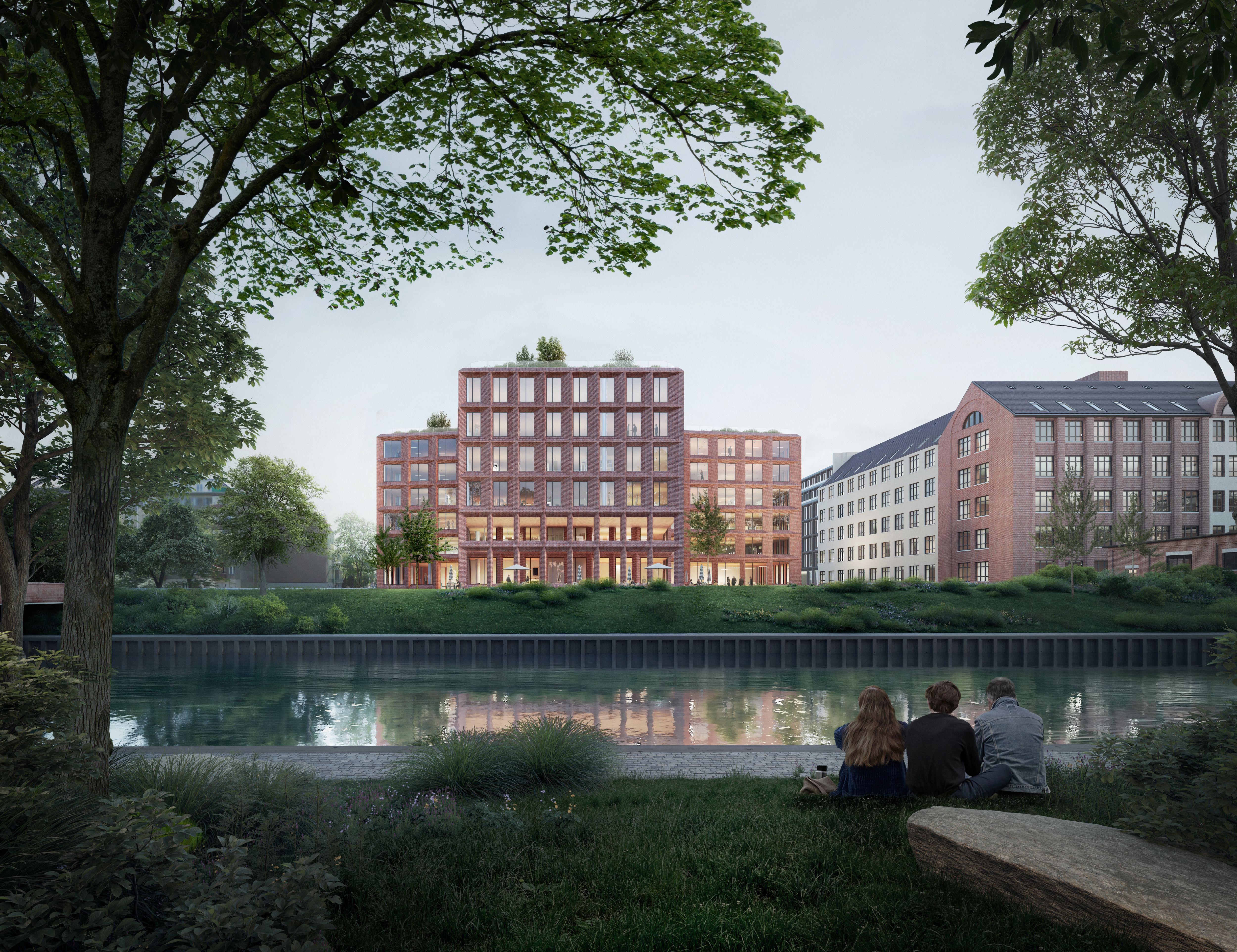
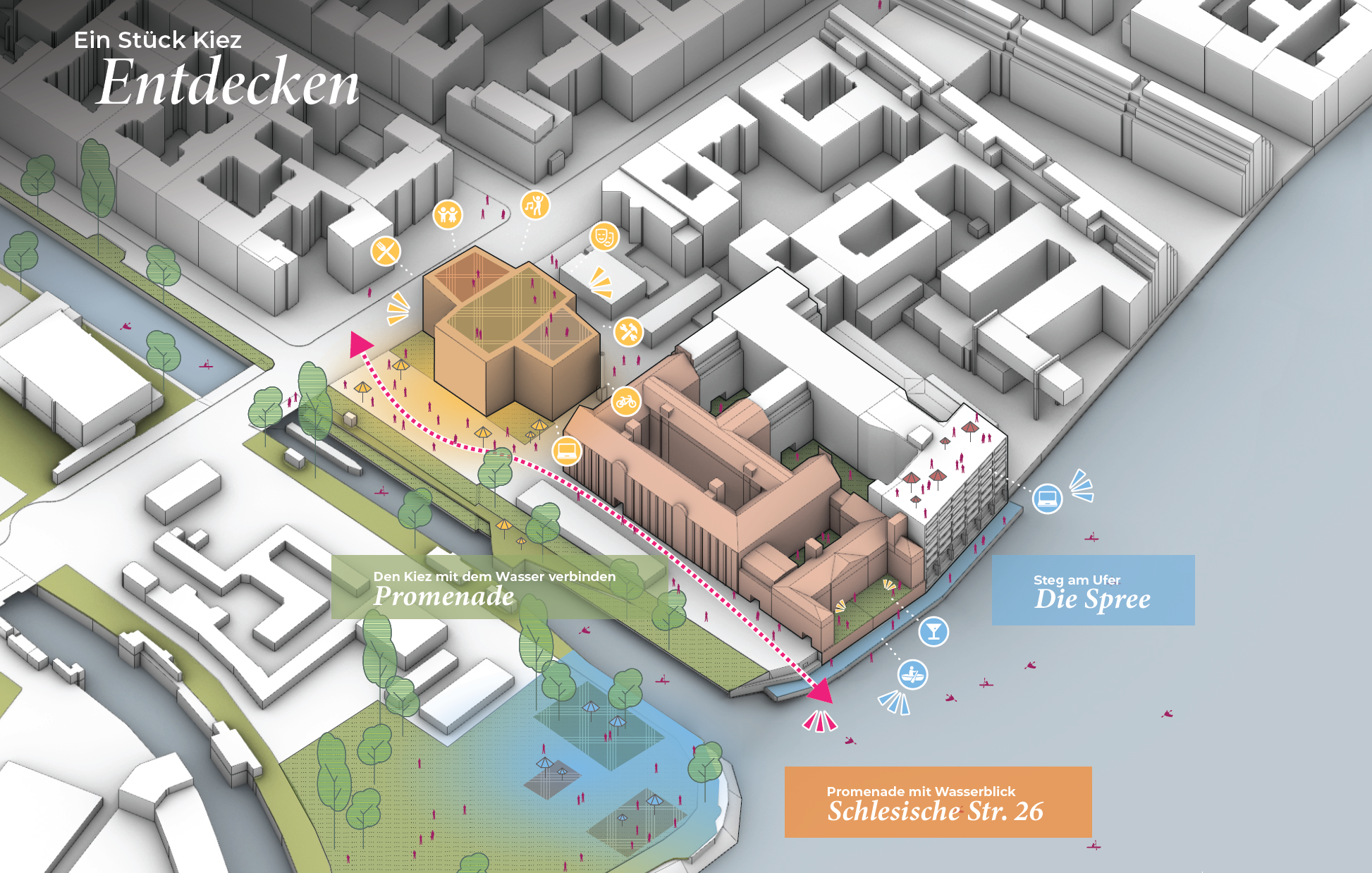
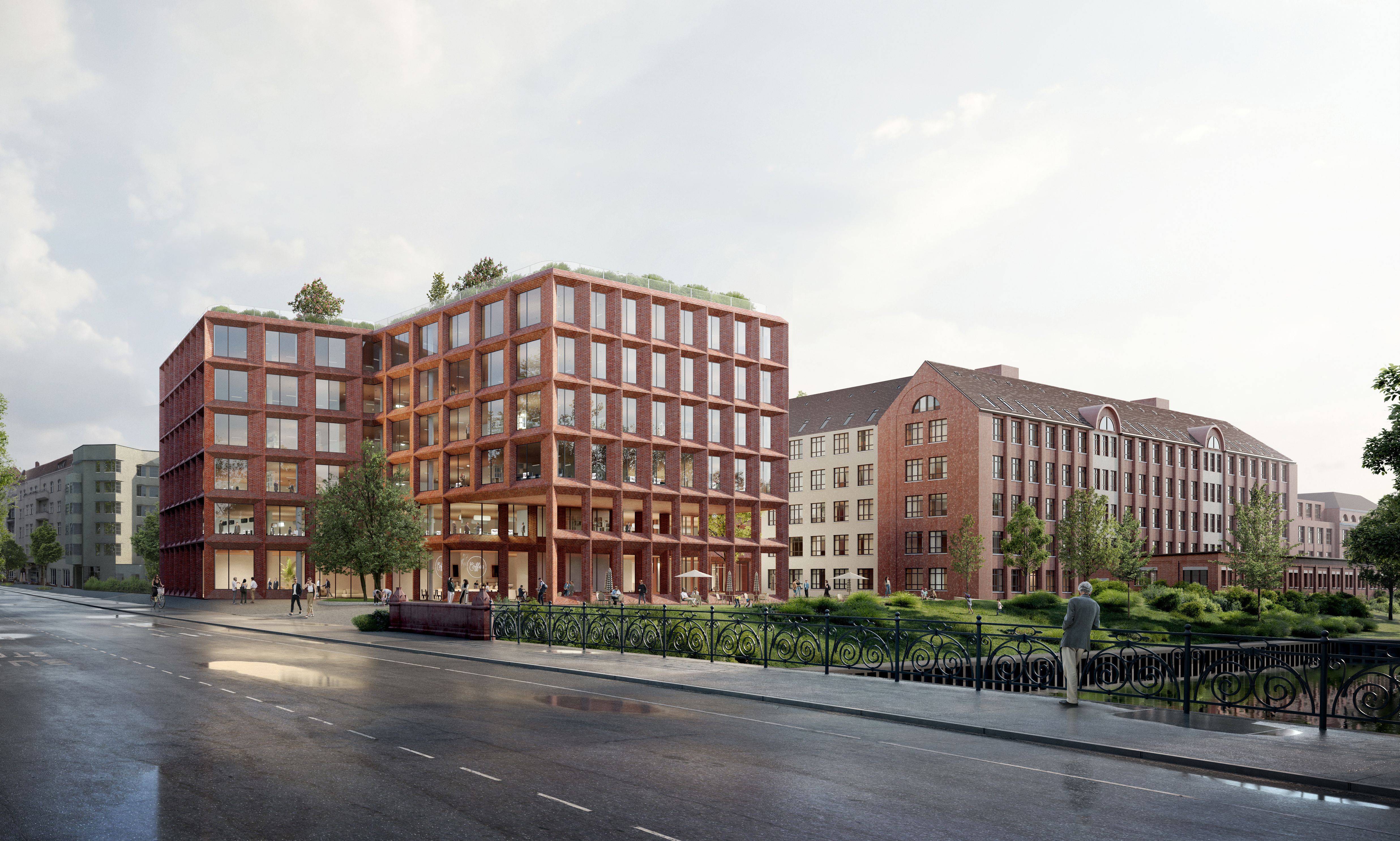
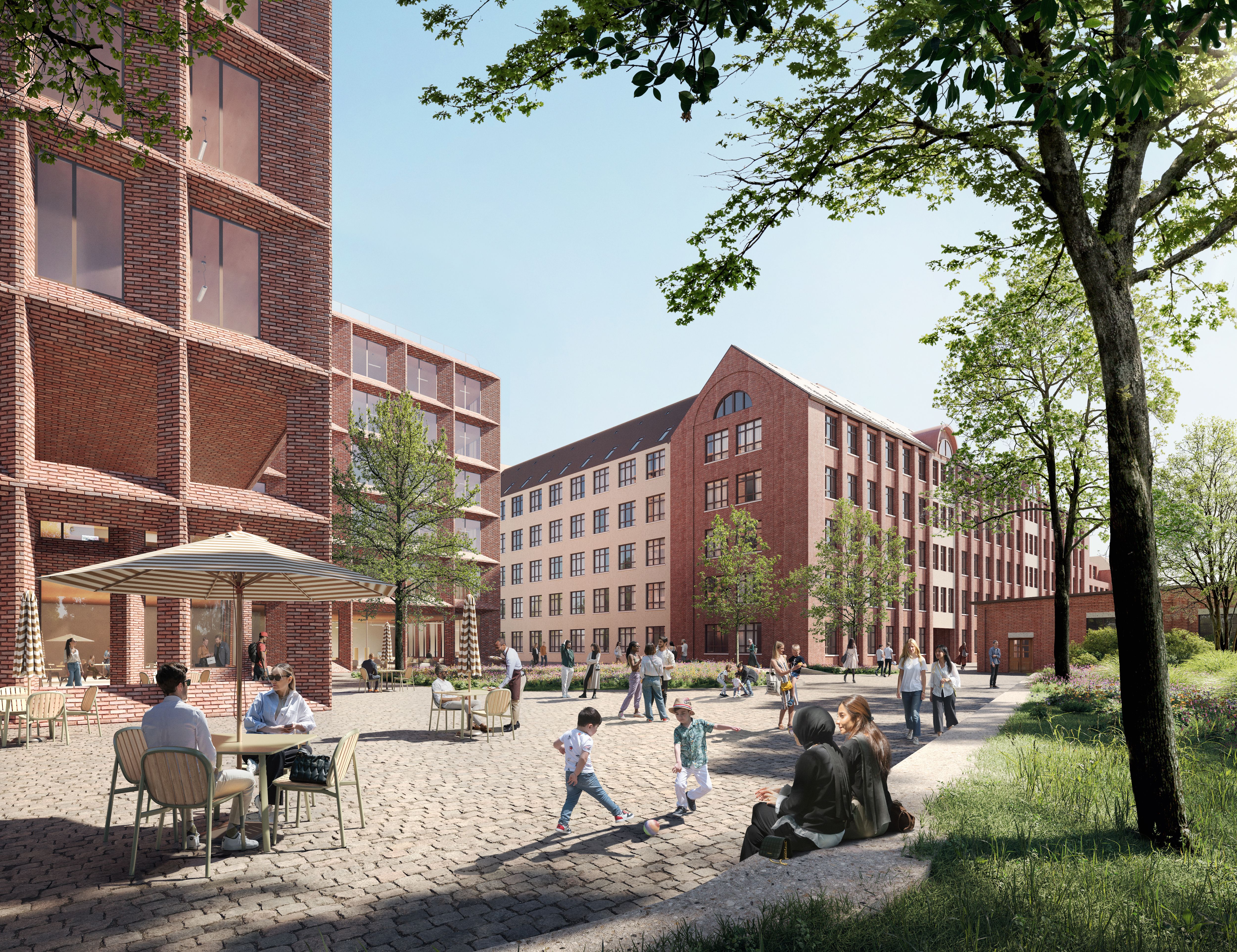
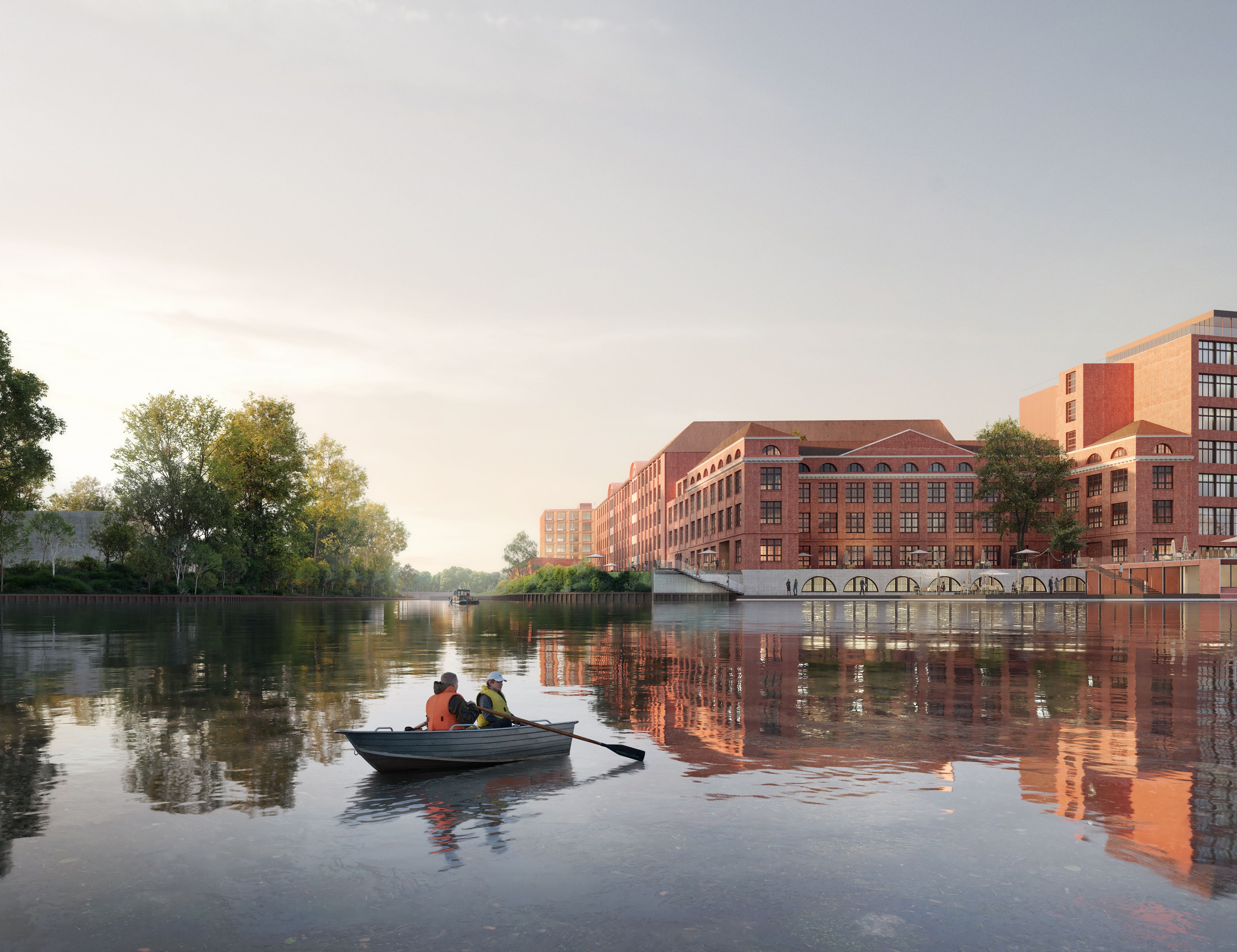
The historic buildings are complemented, while the new freestanding structure adopts the proportions, scale, and materiality of the existing buildings. All building volumes define a sequence of open and enclosed outdoor spaces, creating a distinct urban neighborhood.
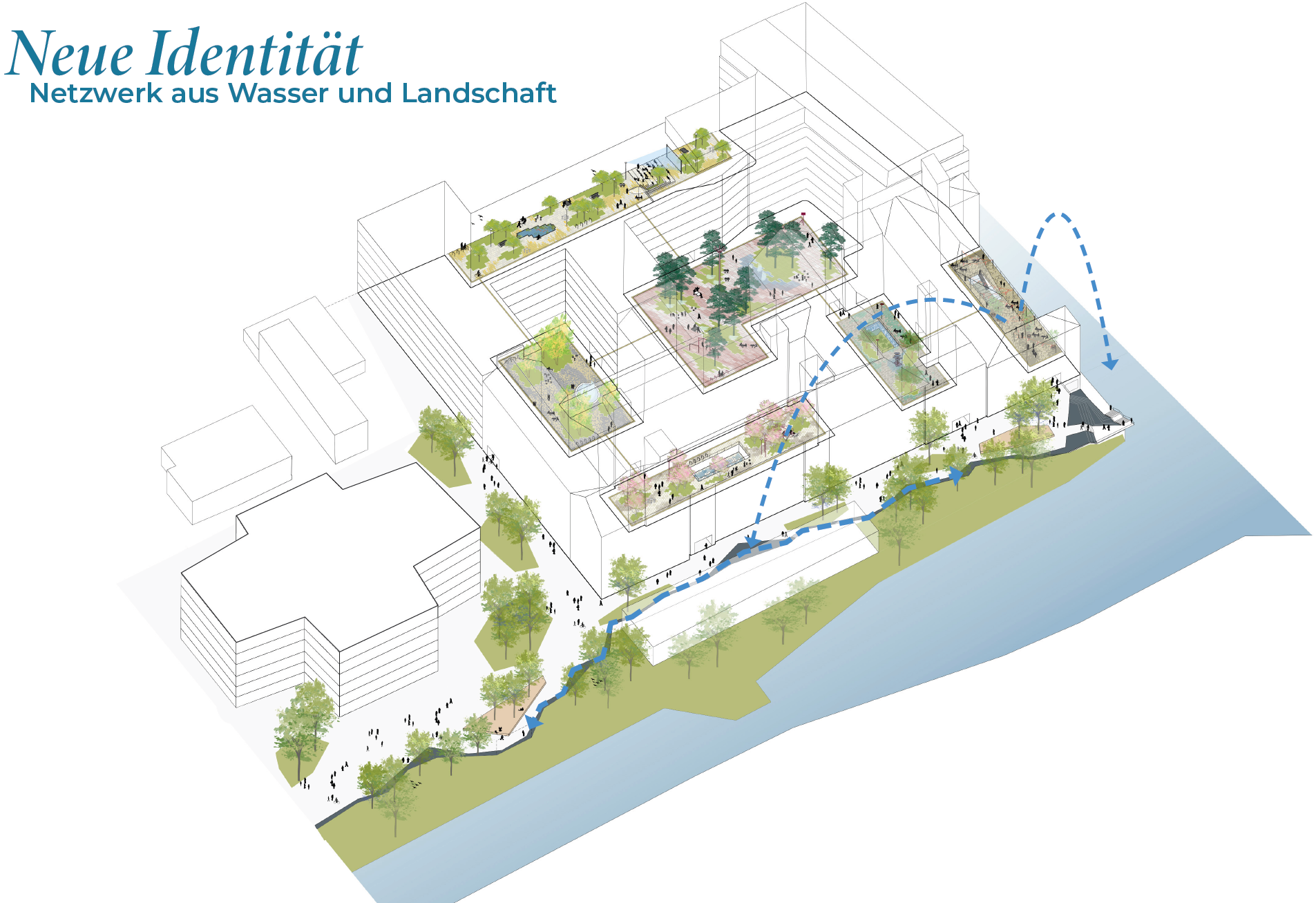
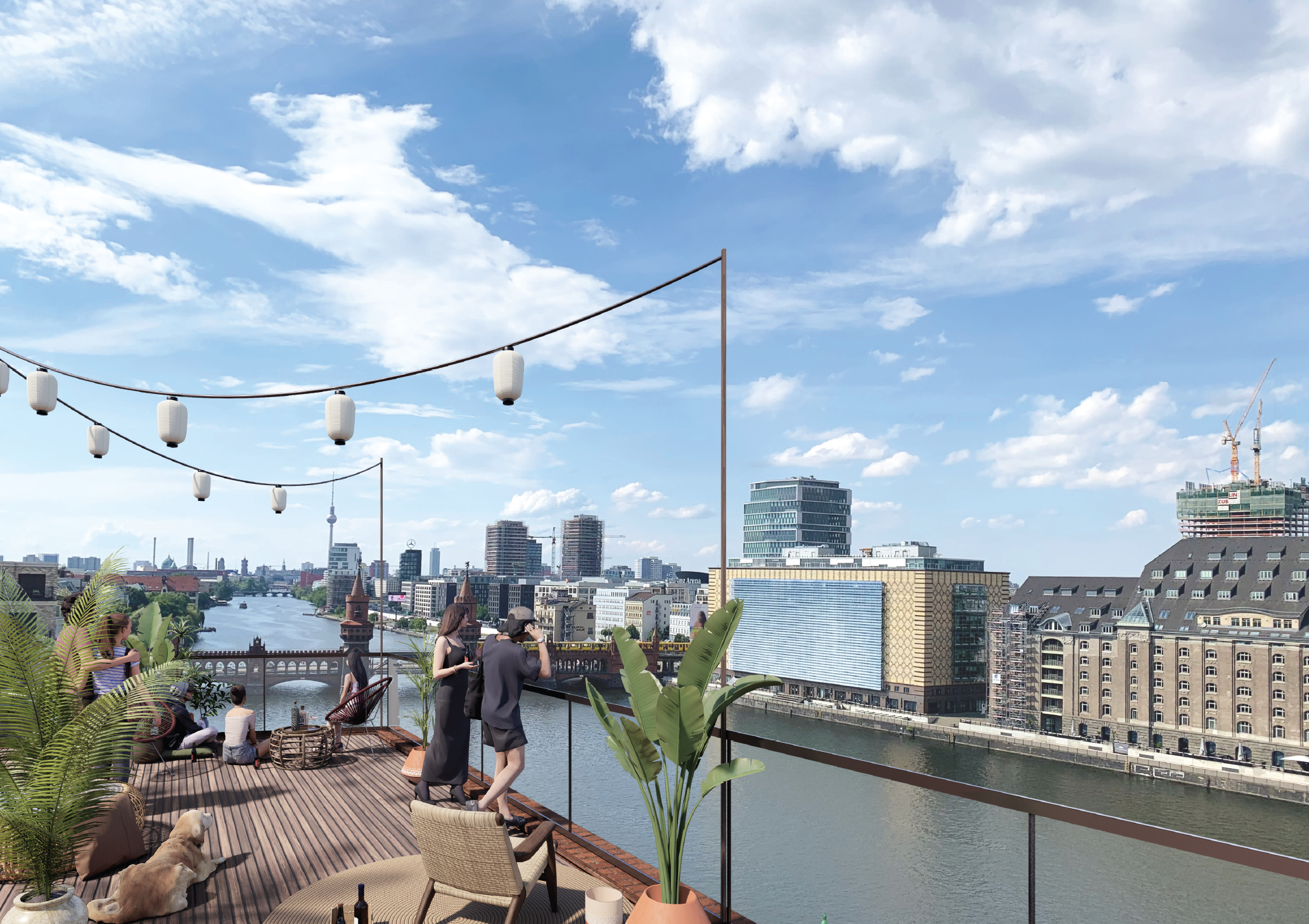
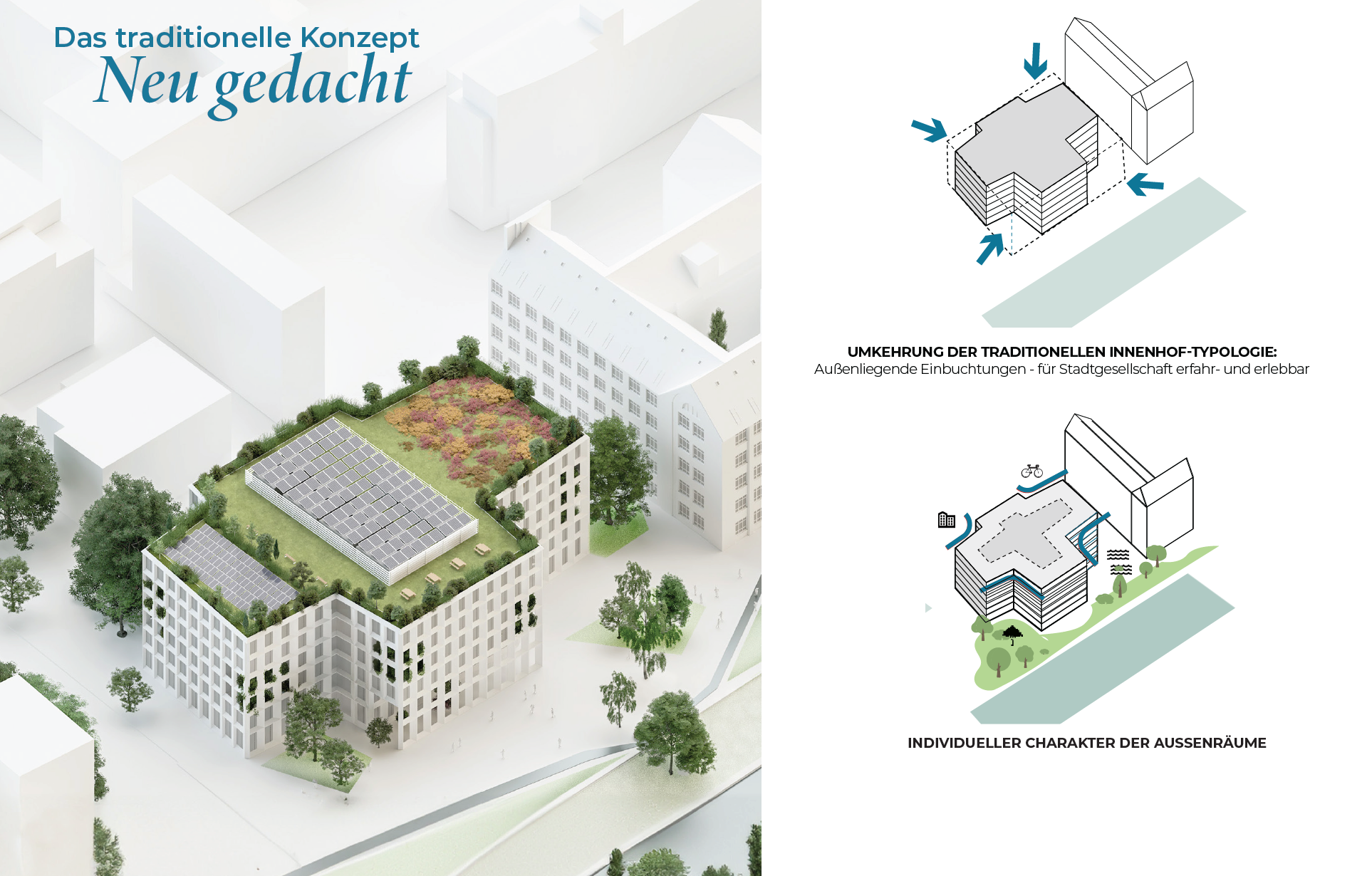
The new building on the south side marks the new entrance to the site. Its freestanding a cross-shaped building creates a setback from the striking neighboring Grenander building, thus highlighting its gable end. At the same time, numerous views of the Spree River and the adjacent canal are created. This creates a diverse public space with numerous distinct addresses, as well as a strong sense of identity and flexibility for different tenants and potential changes in use. The interconnected courtyards foster synergies, easy access, and readily available escape routes.
The listed building complex is to be optimized, and the site expanded with a new building. GRAFT proposes a complementary volume with a cross-shaped floor plan. This freestanding structure completes the building complex and simultaneously marks the southern gateway to the center of Berlin.
The future of work demands both a clear building identity and highly flexible spaces. The proposed density and heterogeneity offer the advantage of high resilience to structural change and dynamic development within the commercial district. This allows for the integration of complementary uses which create a robust mixed use context.