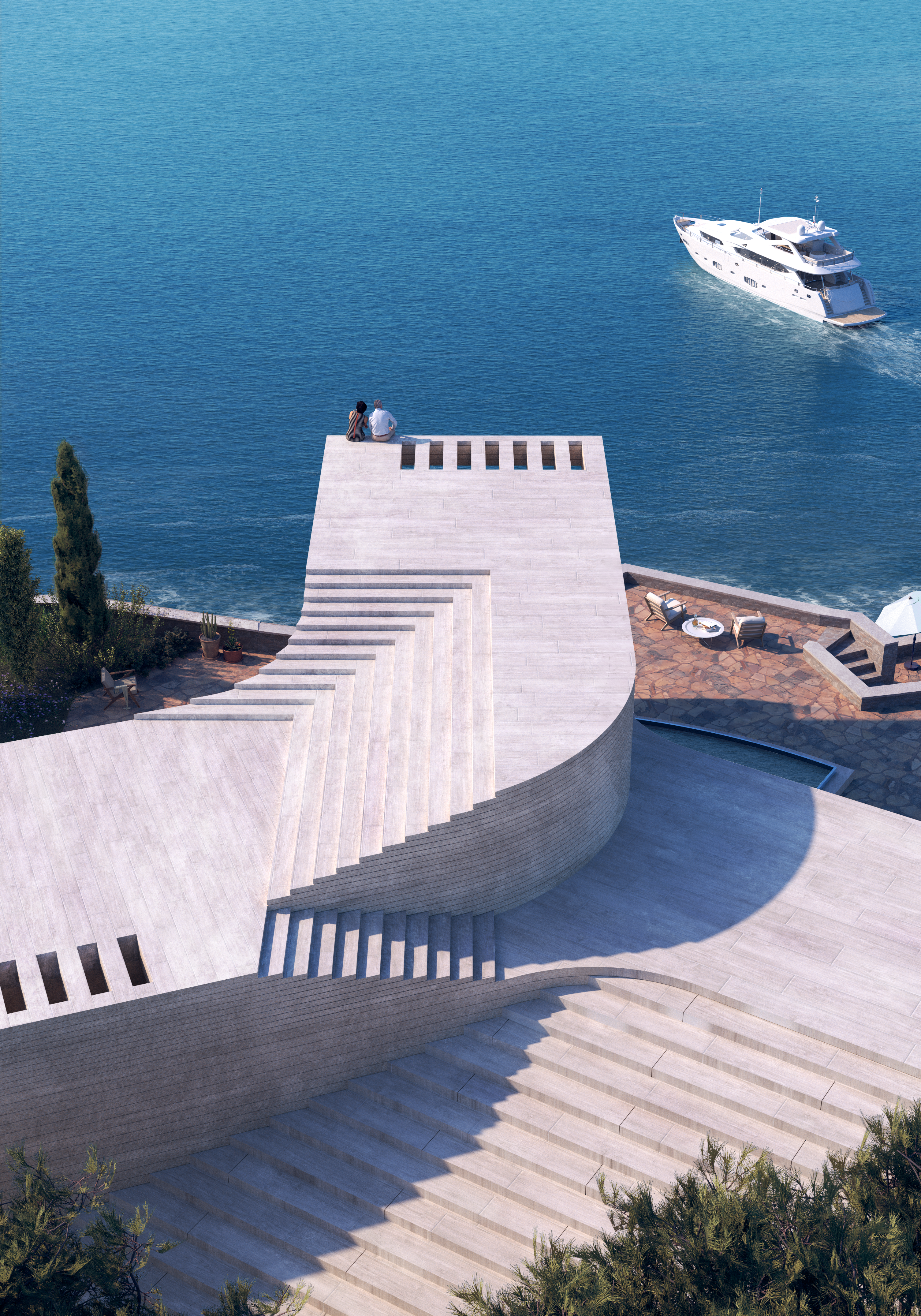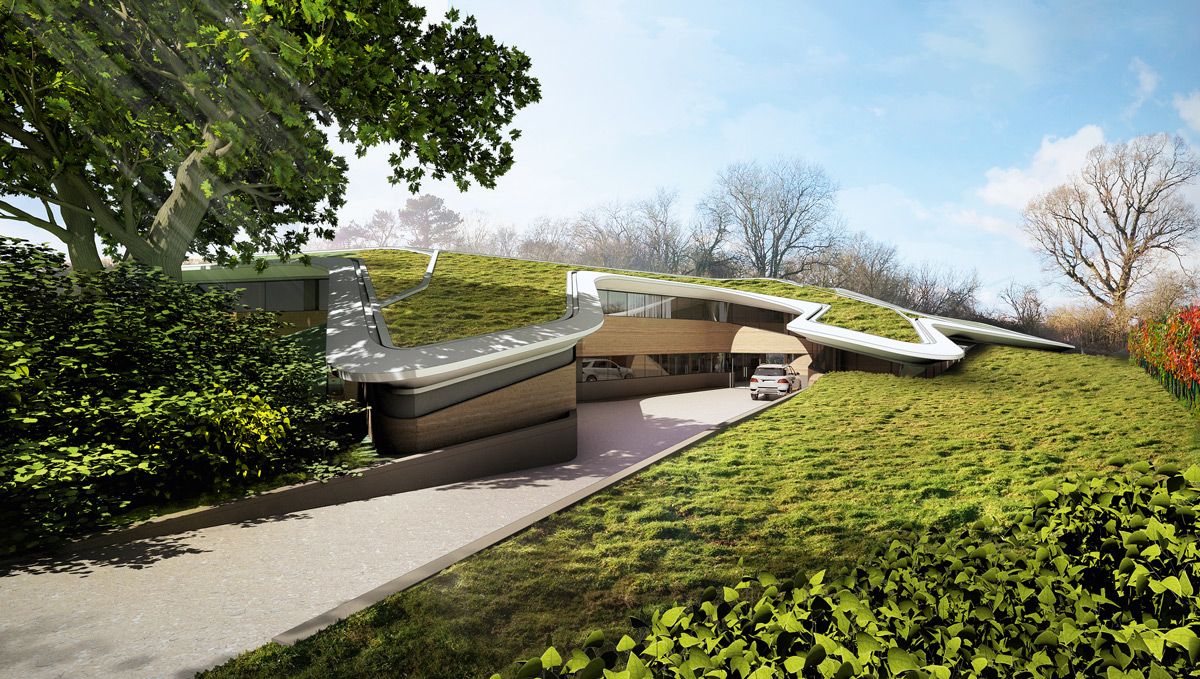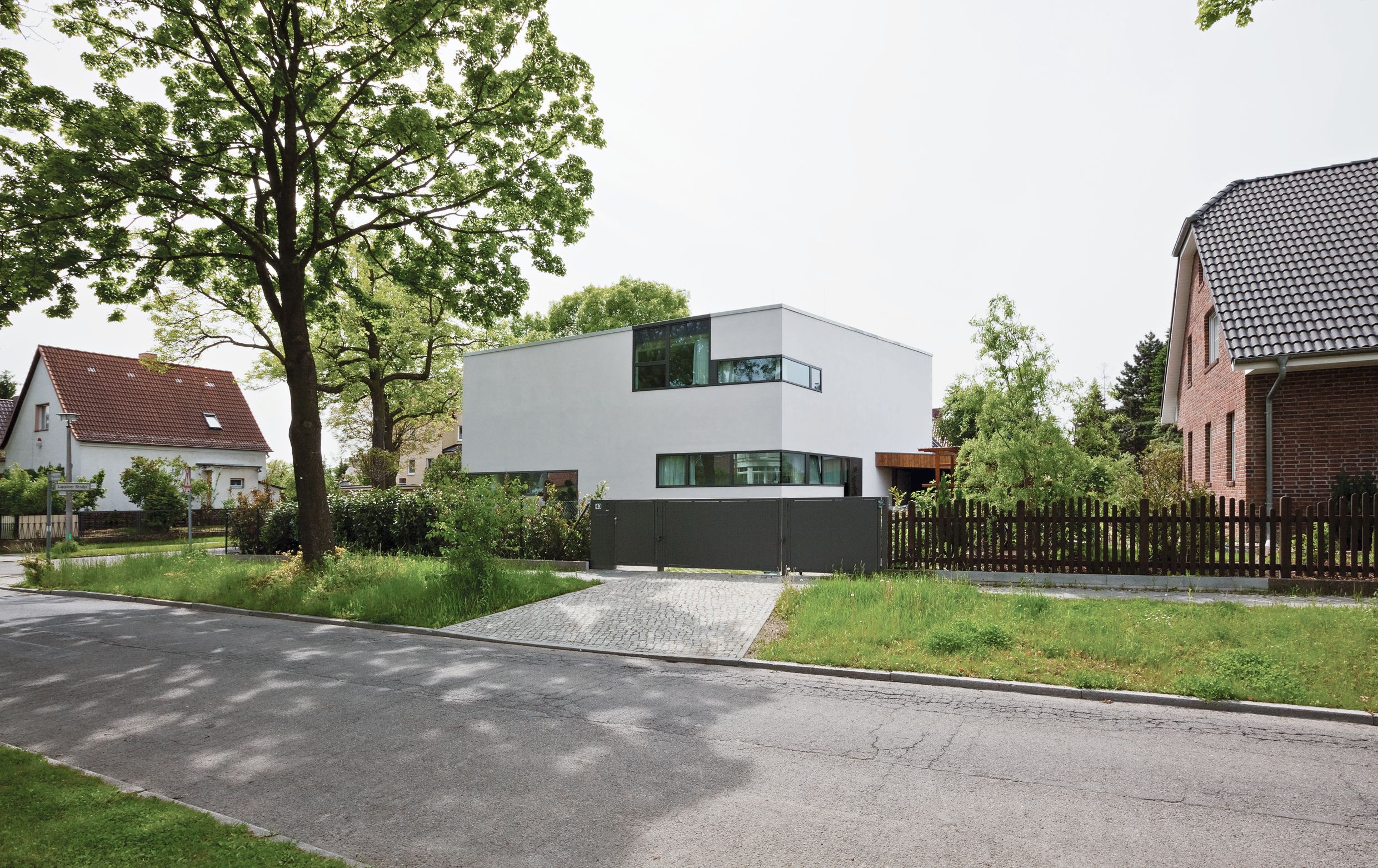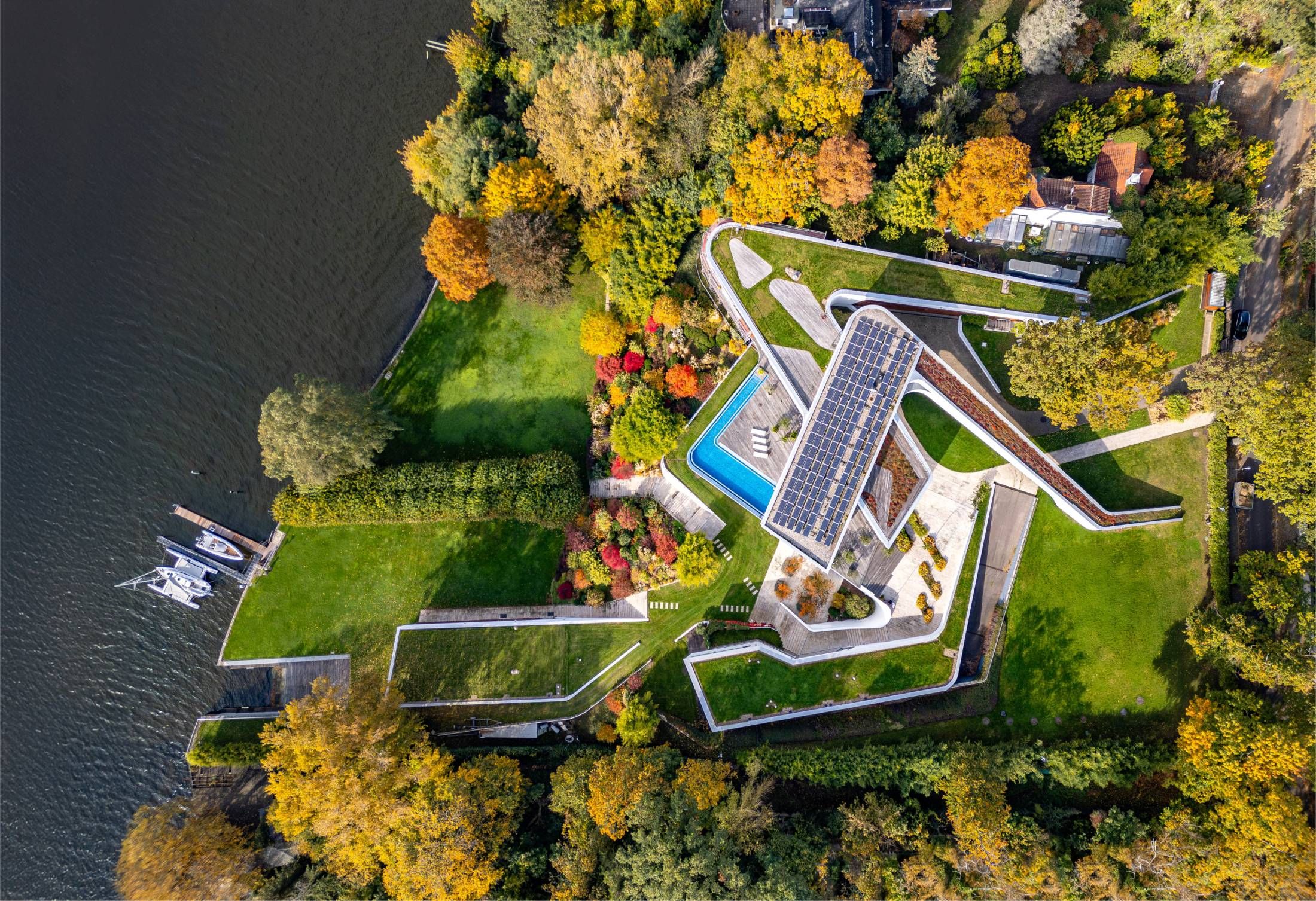
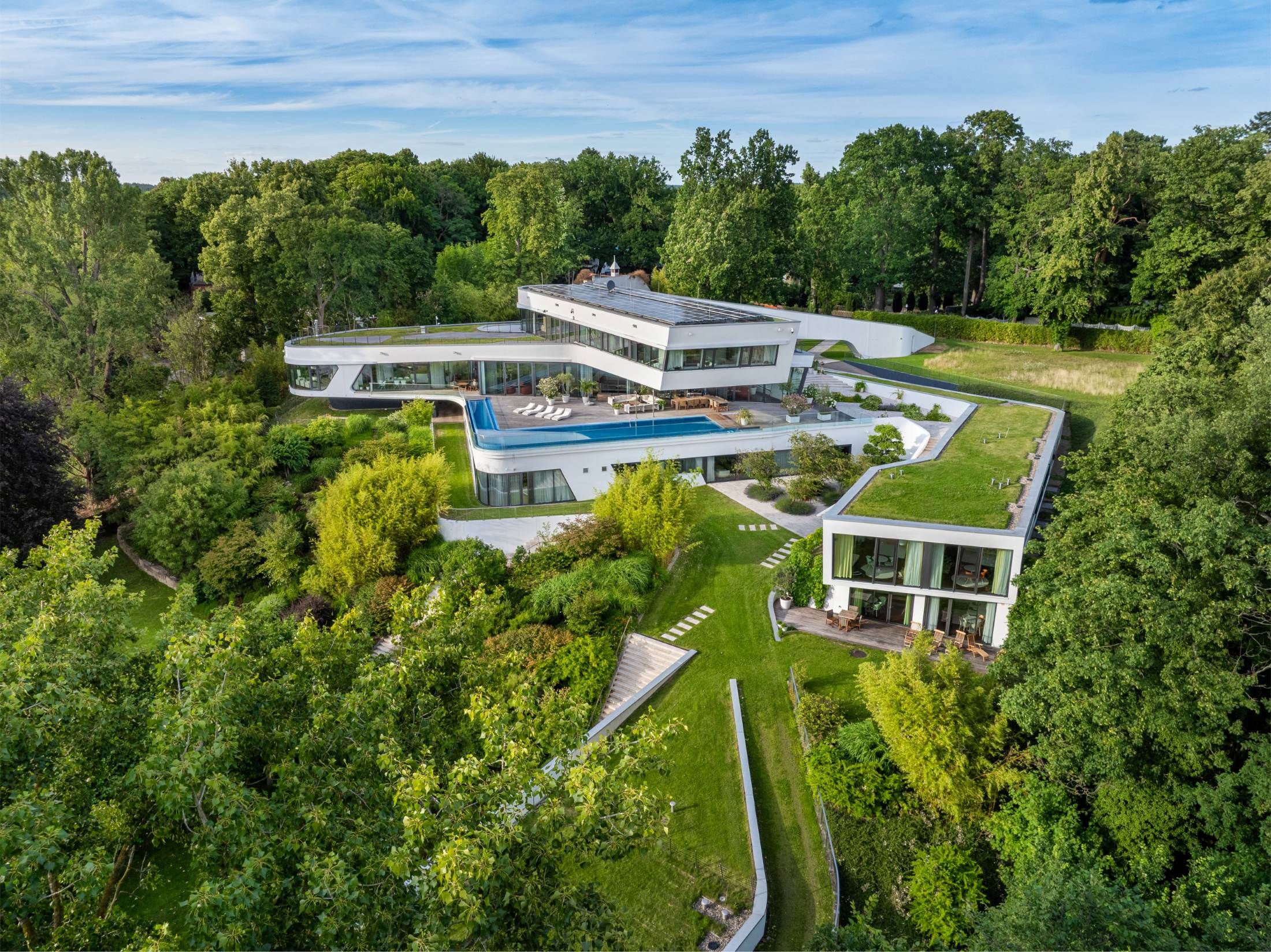
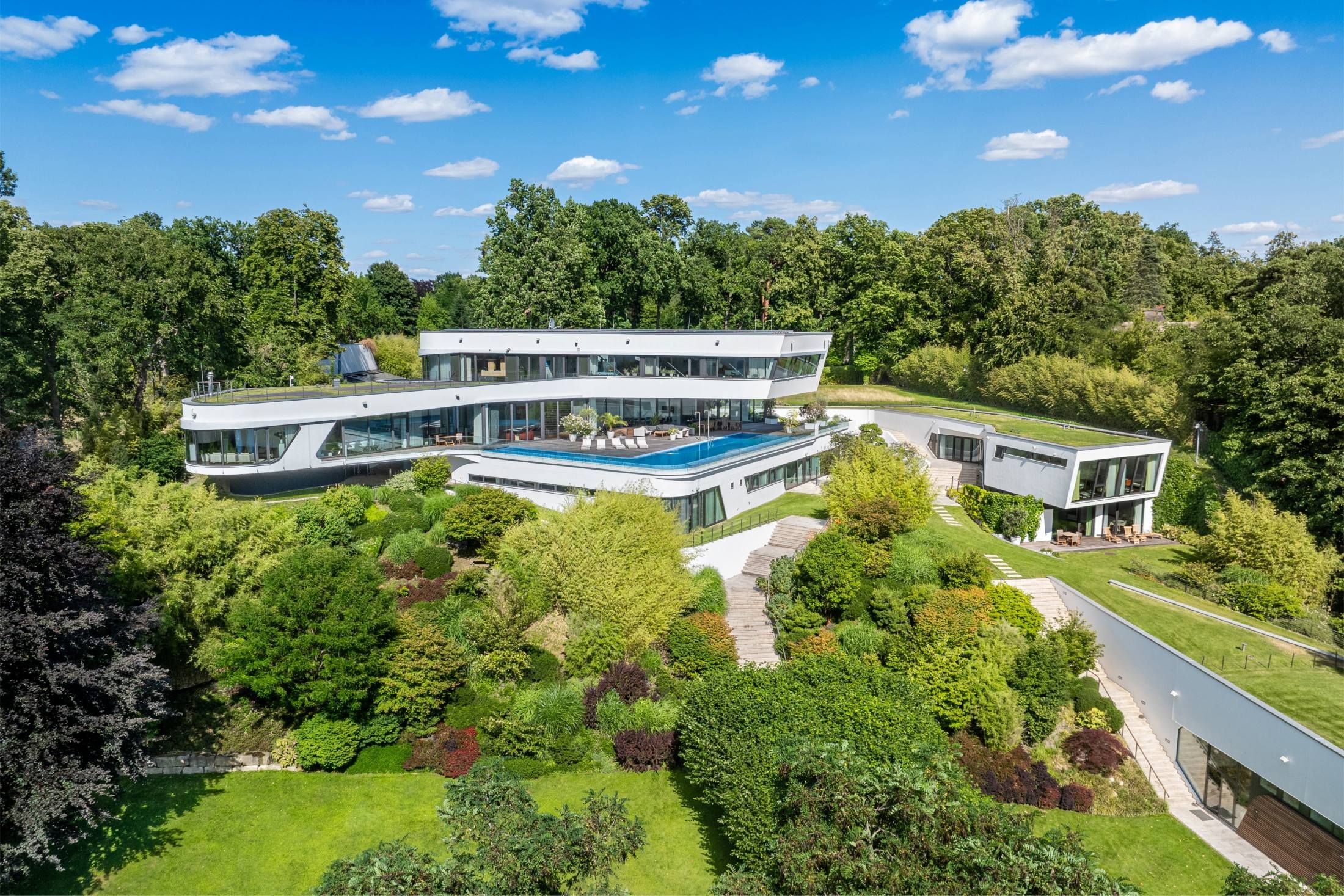
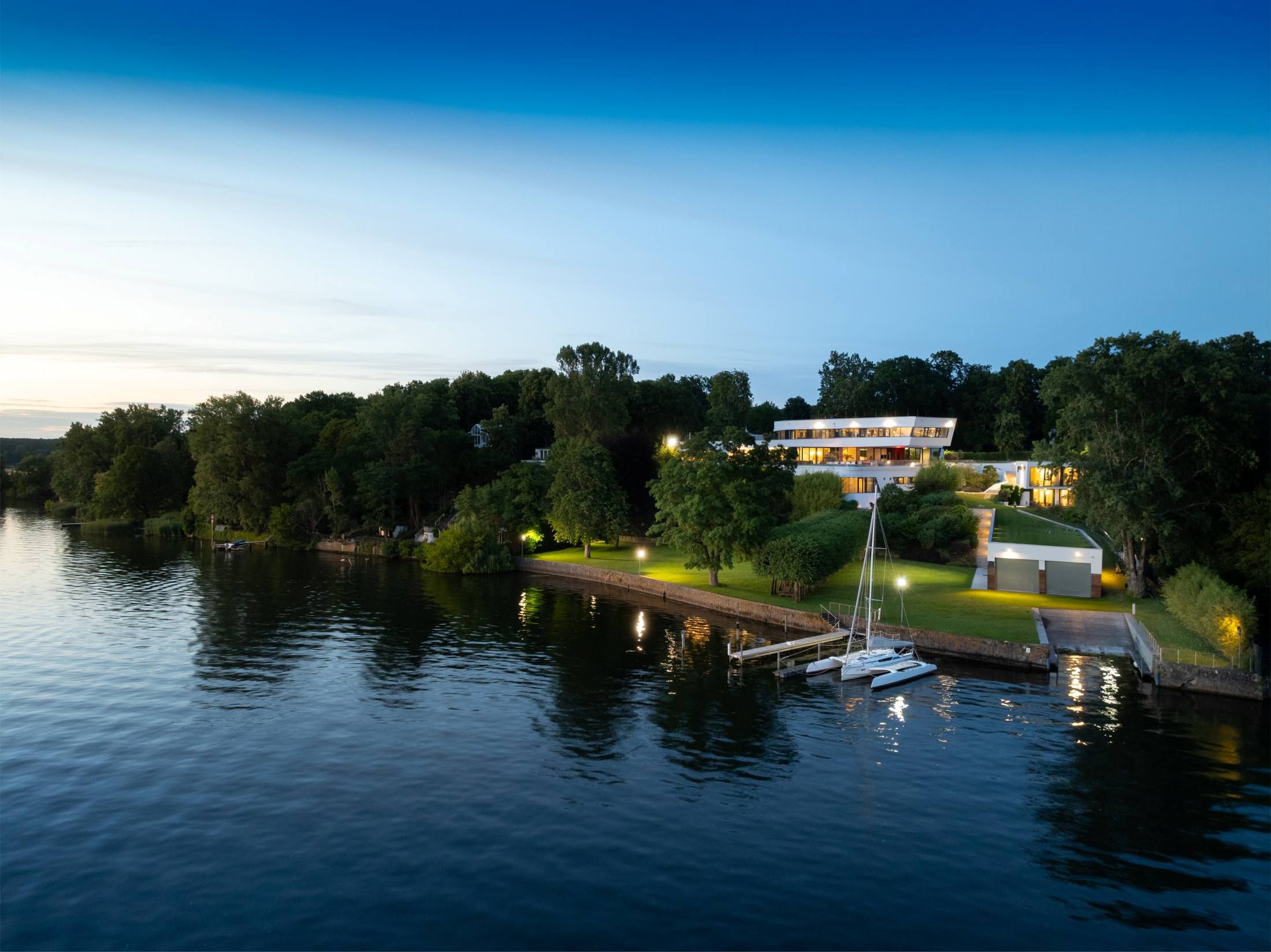
Situated in an exceptional location on the lakeshore with a view of the lake to the southwest, the villa occupies one of the most prominent spots in Berlin. The design takes advantage of the approximately 10-meter elevation difference on the property, integrating parts of the building into the slope. From the street, however, the upper floors appear to rise from the ground and overlap in a crisscross pattern. Thus, the building has a moderate height along the street while offering spectacular views of the water.
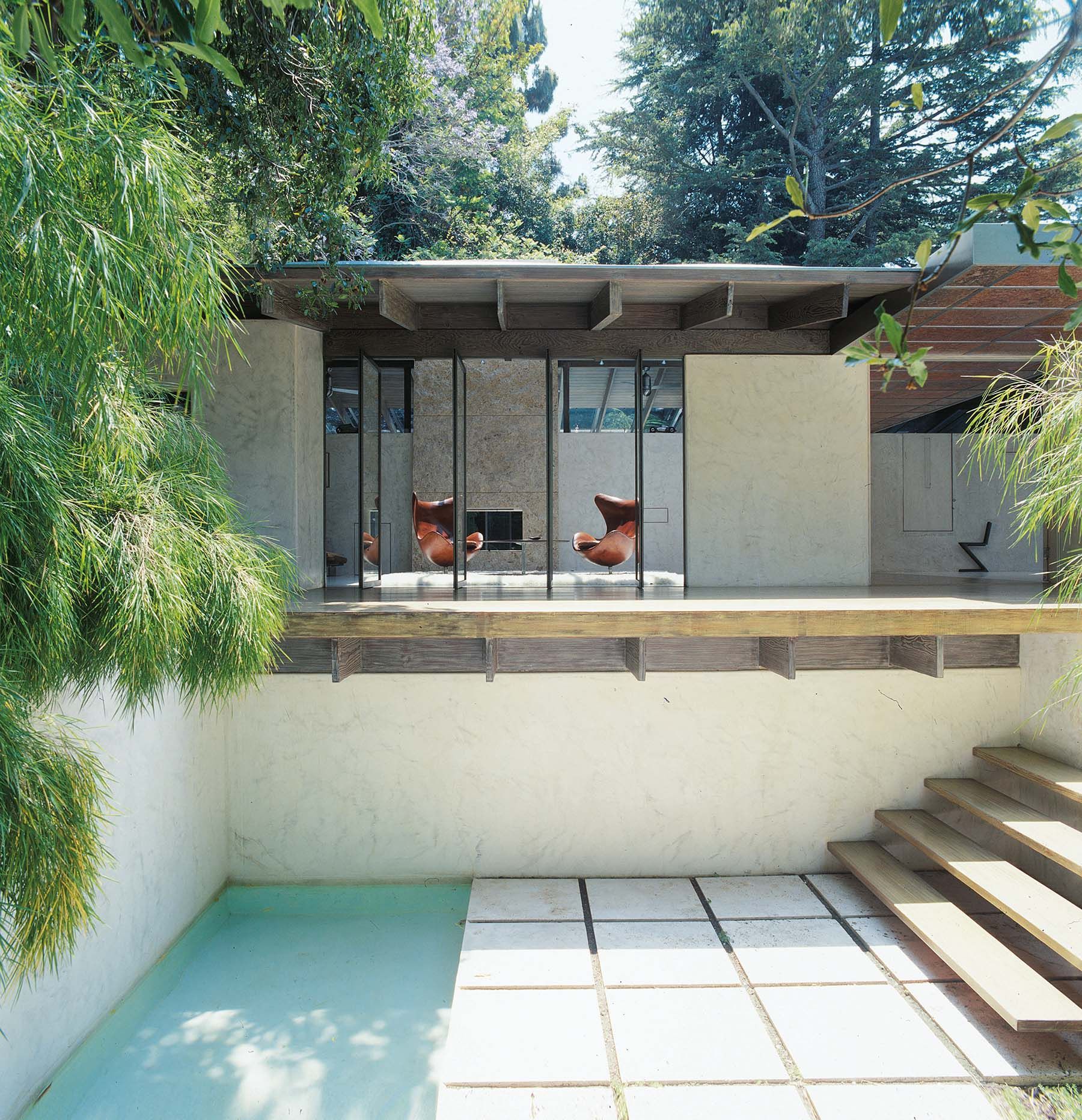
Three main volumes frame the site and rise gradually from the surrounding landscape. The interlacing and interlocking of the building volumes also structure the outdoor space into an arrival area, various outdoor terraces on multiple levels, and the garden by the water. These different levels allow for diverse use of the property and varying degrees of privacy. Furthermore, the building volumes create a dynamically flowing outdoor space that extends from street level to the lakeshore. Where the building sections overlap, interesting spatial intersections emerge, both inside and outside.
The rituals of movement and encounters—as people enter the house, move through its interior, and exit again via the views and pathways—create a scenography that ultimately seems more important than the building’s physical form itself.
All building parts are oriented towards precisely framed views of the lake, responding to the geometry of the site and shoreline. The aim is to establish a new genius loci and blend the building with the surrounding landscape, thereby interfering as little as possible with the natural panorama. The site, which had been completely cleared of trees by the previous owner, is now regrowing, thereby pleasantly restoring the green, tree-lined character of the shoreline to neighboring properties.
Thus, the design builds upon the qualities of the site while simultaneously enhancing them—the sloping terrain, the restored tree cover, the unobstructed view across the lake.